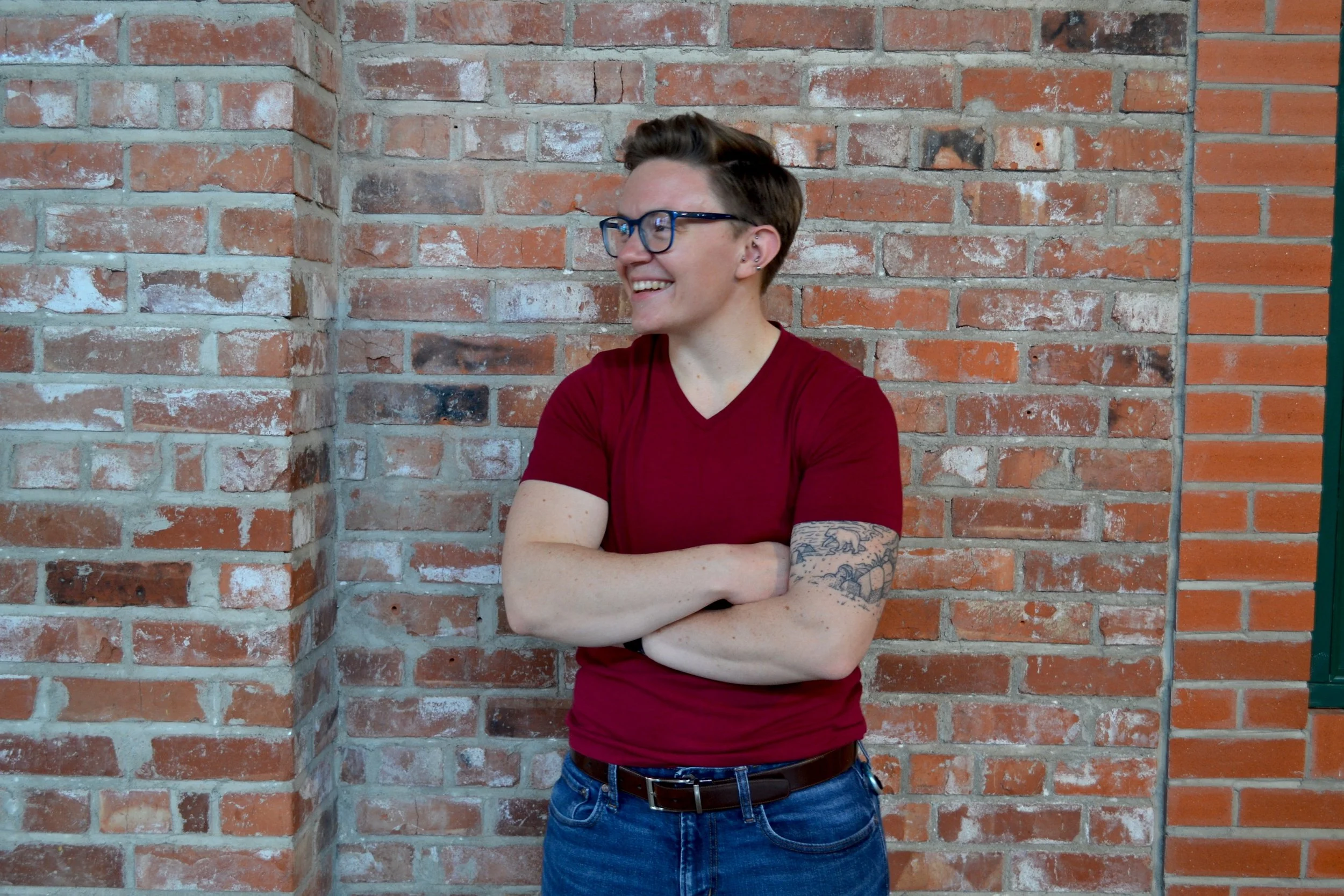
It Me.
Nerdy, queer, and a genuine Pacific Northwesterner.
CJ discovered clay after obtaining a 3D Digital Graphics BFA in 2011 at the Rochester Institute of Technology. In 2025, they earned their MFA in Studio Arts at the University of Oklahoma, and are currently the Resident Artist and Assistant Lecturer at the University of Akron in Akron, Ohio, as well as Assistant Lecturer at the Cuyahoga Community College in Cleveland. Their work has been shown across the US and internationally, including at the Guldagergaard International Ceramic Research Center in Denmark, the San Angelo Museum of Fine Arts, and the Fred Jones Jr. Museum of Art. Amongst other awards, they have most notably received the annual 2023 Graduate Fellowship award from the National Council on the Education of Ceramics and the 2023 University of Oklahoma’s Robberson & Wethington Research Scholarship.
When CJ isn’t sculpting, they enjoy teaching, exercise, complex board games, and spending time outdoors. They are a personal trainer, group fitness coach, and got their start teaching continuing education ceramics classes at North Seattle College.
Artist Statement
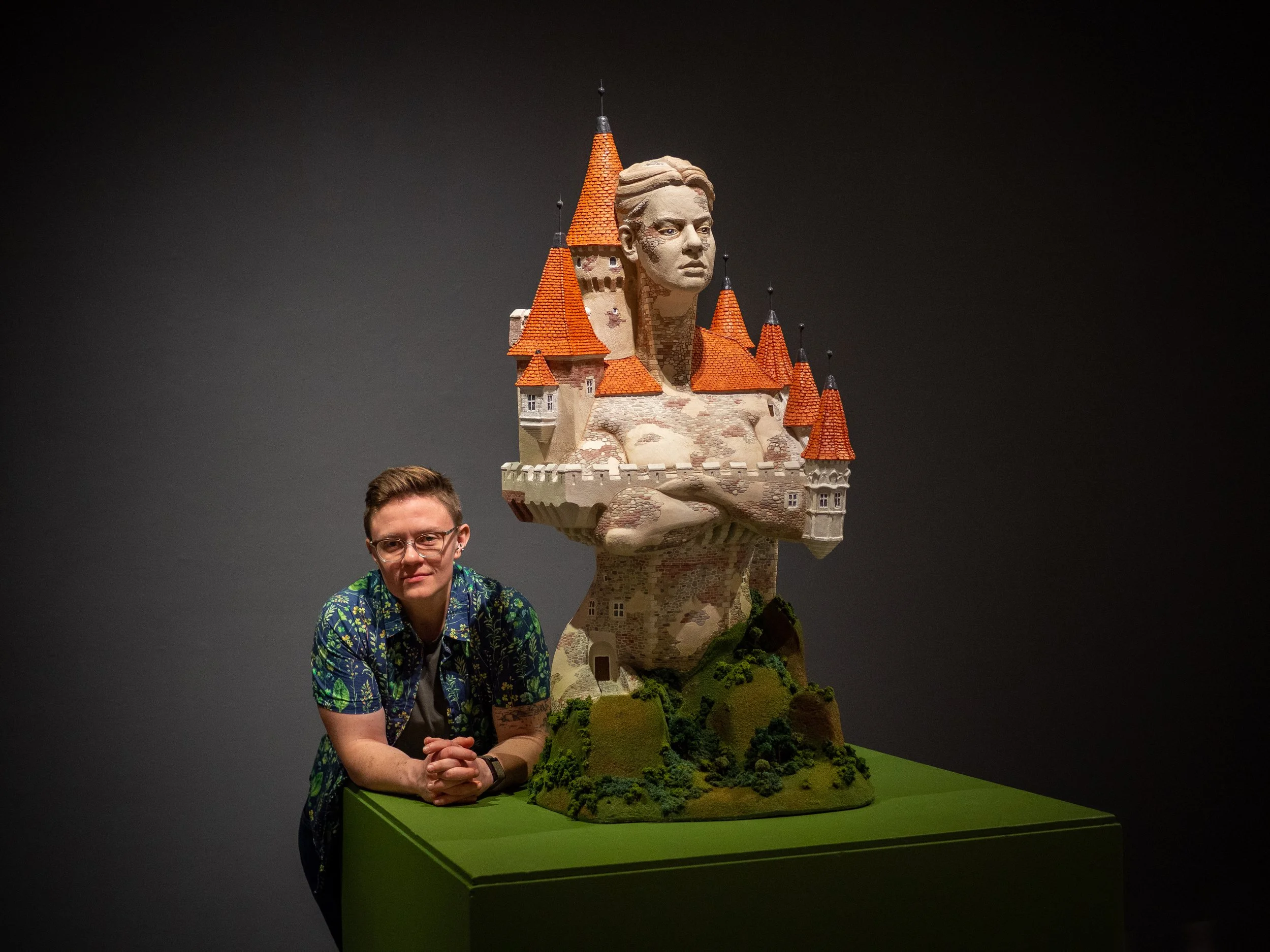
Through the integration of architectural details into figurative sculpture, I am investigating cultural expectations of gender and its relationship to power. I aim to express alternative genders and explore the contradictions of our human nature through three primary elements in my work: structure, function, and aesthetics.
The parallels between a building and the body are full of opportunity. We decorate ourselves with Baroque tattoos and Rococo jewelry. We go through different gender expressions as we age, like a house under construction. We require care and upkeep and guard our bodies as we would our settlements. Humans are not efficient, nor indeed, structurally sound.
Just as an engineer would consider the strength of a cross beam, I focus on the structure of the sculpture itself. I build my sculptures solid on an armature (as a building is on a frame), allowing me the flexibility to push and pull the clay. This is what draws me to clay: it is a physically intensive experience in which I may manually move over 1,000 pounds of clay for a single sculpture, much like bricking a wall or building a cob house.
Function is my next focus: what power do I want my sculpture to invoke? What building represents that emotion, feeling, or strength? As far back as the first century, the Roman architect Vitruvius understood the importance of a building reflecting its function. He wrote of this significance as one of his three principles of architecture outlined in the oldest architectural theory manuscripts that survived from antiquity. To this end, if I am creating an introspective and deeply focused figure, fashioning it after a lighthouse or a library would be more appropriate than a train station or flour mill. This helps the
viewer intuit my intent with the sculpture.
Afterall, our strengths as individuals are rooted in our differences and what we have to offer to the community. A leader’s strengths are capitalized by loyal friends. A dedicated worker is more productive with supportive coworkers. And as those sentences contain no indication of gender, I aim to have my sculptures personify these varying strengths regardless of what one would assume would be their gender assigned at birth.
Finally, aesthetics are of the utmost importance. I am considering not only the pose and the gender expression of the figure, but also what architectural era to utilize. I am intrigued by the elaborate details in architecture, as they resonate with the contradictions of human nature. We seek perfection but are hopelessly hand-built. We want comfort, but we fear boredom. We spend so much time nurturing and tending to our facades, but are lonely if no one takes the time to notice what we contain. We want to live in beautiful yet functional places that are secure but also near other people. We want privacy and floor-to-ceiling windows.
All of these qualities are experienced by individuals across countries, generations, and genders. The function of the sculpture combined with the gender expression of the figure stands in opposition to the stereotyped qualities ascribed to men or women thus I want my viewers to reconsider their notions of both power and beauty when they engage with my work. If they see strength that is simultaneously masculine and feminine, impressive yet relatable, delicate yet enduring, then I will have been successful.